
Oysters Don't Have a Fixed Flavor—And That's the Point
Oyster flavor isn’t static. It’s an ever-changing expression influenced by time, place, and energy.
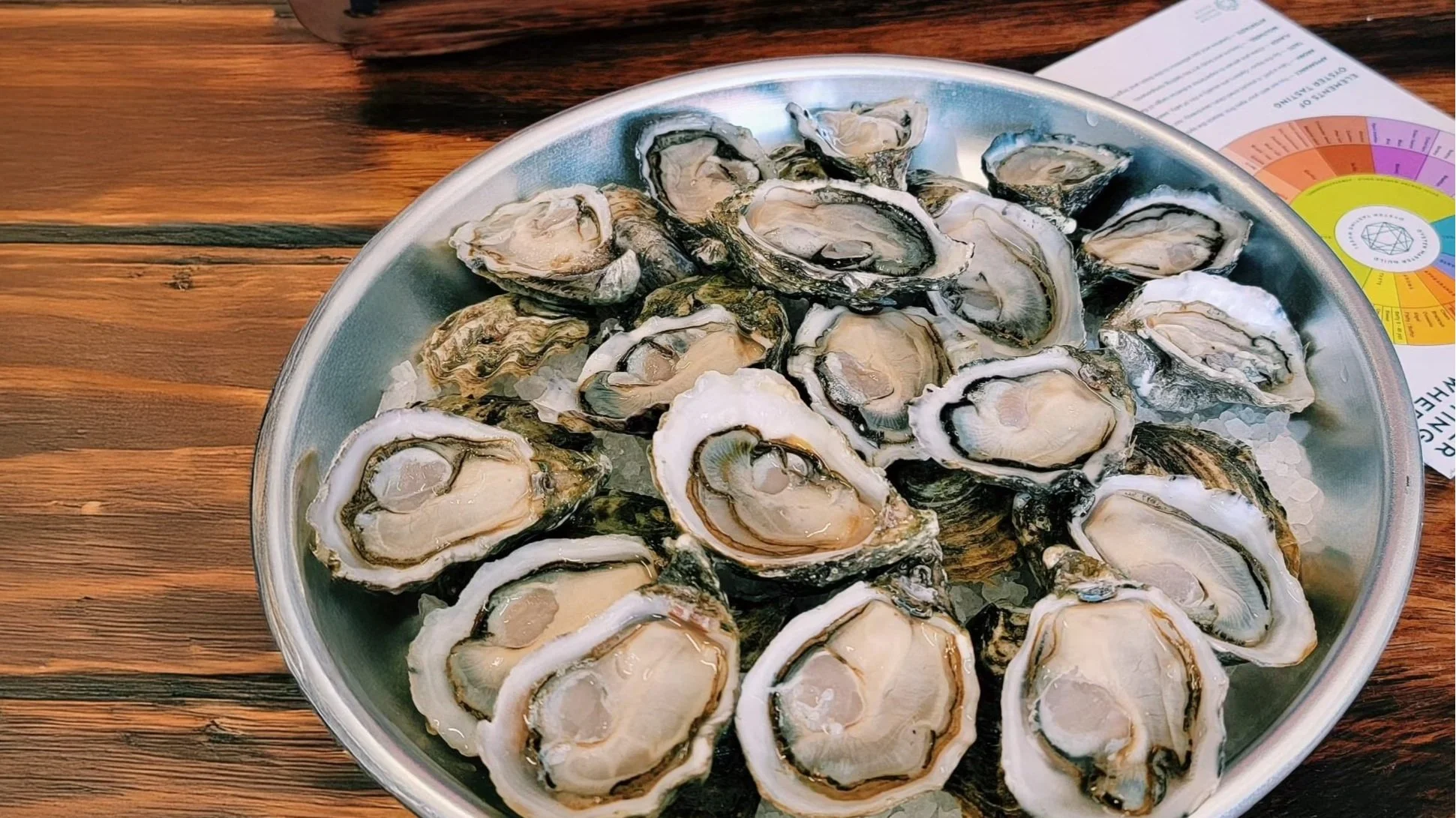
This blog post explores why tasting an oyster is more like recognizing a face than describing an object, and why embracing this fluidity is key to truly understanding them.
I’ve been reading this book, Neurogastronomy: How the Brain Creates Flavor and Why It Matters by the late Dr. Gordon M. Shepherd, and there’s this idea in it that’s really stuck with me. It talks about how our brain processes smells—an enormous part of flavor—in a way similar to how we process images. Just like we recognize faces (our best friend, our grandma, or our significant other in a crowd), we can just as easily and effortlessly recognize scents. The brain sorts through a massive library of patterns, making sense of them instantly.
That got me thinking: if we recognize flavors the same way we recognize faces, then describing an oyster as having a specific, fixed flavor is about as useful as describing a person as having just one facial expression.
A face isn’t a static thing—it shifts constantly. A person might wake up groggy, brighten up over coffee (or oysters 🤣), furrow their brow in concentration by noon, and laugh wildly at a joke in the evening. Expressions evolve with the moment, with the mood, with the surroundings. Oysters are no different.
When we talk about an oyster’s flavor, we often try to pin it down: briny, sweet, metallic, creamy, cucumbery. I can’t tell you how many times I’ve been asked by a reporter, an editor, or even an oyster grower to help articulate the flavor profile of specific oyster varieties. It’s a seriously daunting, crippling task for someone who knows too much. But the reality is that tasting and writing about an oyster is more like observing someone throughout the day—what you experience in one moment isn’t necessarily what you’d get the next time. The same oyster can taste dramatically different depending on where it is in its life cycle, what it’s been eating, the salinity of the water that week (or day!), how much stress it has recently endured, and even the temperature at which it’s served. There’s a reason people quibble over the exact notes of a particular variety all of the time—because flavor isn’t a fixed identity, it’s an expression in flux. Not to mention that our individual flavor perception capabilities also vary wildly, but that’s a whole other story!!
That said, describing an oyster’s flavor profile still has merit. It allows us to compare different varieties and species, to distinguish one from another in a meaningful way. Plus, it can be very fun! Oysters from different areas have distinct characteristics that set them apart—some are unmistakably mineral-rich, others burst with sweetness, while some carry an earthy, mossy depth you’d never find elsewhere.
The challenge isn’t or shouldn’t be in cataloging oysters by their flavors but in recognizing that those descriptions are merely impressions. They don’t define the oyster absolutely; they capture a moment in time.
I first had a poignant realization about this when reading A Geography of Oysters: The Connoisseur's Guide to Oyster Eating in North America by Rowan Jacobsen. His book, written in 2008, was my OG oyster bible—it set me on the path to becoming who I am today. I carried it to oyster bars, comparing Rowan’s tasting notes to my own experiences in real-time. Sometimes, I saw exactly where he was coming from. Other times, I found myself tasting something completely different. At first, I doubted myself—was I doing something wrong? But over time, I realized that it wasn’t about right or wrong. It was simply that the oyster I was tasting in that moment was expressing itself differently than the one Rowan tasted when he wrote his notes. That realization showed me that while tasting notes are useful, they are personal snapshots and not to be taken as universal truths.
This insight deepened when I started keeping my own oyster tasting journal, tracking my myriads of oyster experiences over the years. I frequently revisit oysters like Baywater Sweets from Thorndyke Bay, Puffer Petites from Wellfleet, Kumiai from Baja California Sur, and Beausoleil from New Brunswick, Canada. Because I know these growers and their oysters well, I can refer back to my notes year after year to see what has remained constant and what has evolved. Some flavor descriptors, surprisingly specific ones like “miso soup,” “seared scallop,” or “crisp romaine lettuce,” appear repeatedly in my notes, despite the variations in season and conditions. It makes me wonder—are these flavors signature to that oyster from that place, or is my own perception and flavor memory more consistent than I thought? Either way, it reinforces the idea that oysters, like faces, carry both familiar traits and ever-changing expressions.
And just like with people, context matters. A shy smile in one setting can feel entirely different in another. That elegant honeydew note in a Kumamoto might be bright and clear when eaten on a cold day, but overshadowed by a deep mineral richness when the waters have warmed. A glance, a smirk, a fleeting look—each moment of interaction reveals something new. So why should we expect an oyster to be any different?
This is why I find my own and third-party tasting notes both fascinating and a little inadequate without the proper context: where did I enjoy them, when, and even what time of day (I track whether I had them in the AM or PM in my journal as I know my palate fluctuates in sensitivity throughout the day). When I educate others about oysters, especially businesses looking to market their oyster programs, I see how tempting it is to just copy the distributor’s tasting notes onto menus and call it a day. But oysters aren’t manufactured widgets. They are living, ever-changing organisms. No supplier, no matter how skilled or earnest, can keep up with the constant evolution of an oyster’s flavor. Don’t expect them to. The best guest experience comes from continually tasting the oysters you serve and embracing their dynamic nature.
Lately, my work with the Oyster Master Guild, my consulting, and my content creation have all been about shifting this mindset. Instead of locking oysters into static descriptions, I want to encourage a deeper appreciation of their fluid nature. But this isn’t just about my work. It’s something we should all think about as oyster educators and enthusiasts. How do we introduce and describe oysters in a way that honors their complexity?
Maybe the answer lies in how we think about people. We sum up a person quickly when introducing them—kind, funny, brilliant, intense—but we know that no single descriptor captures everything they are. People have good days, bad days, good years, bad years. Their expressions shift, their moods change, and their personality reveals itself differently in different moments and over time. They have distinct traits, but they also exist in constant flux. And perhaps, the best way to understand them is not to define them too rigidly, but to simply appreciate them in the moment, just as they are.
On a final note, I’ll leave you with a video of me leading a recent Oyster Sensory Skills workshop at the inaugural Oyster Educators Summit.
